|
SGD Newsletter August 2026 |

|
About this newsletter:
This is the August 2026 issue of the SGD newsletter. This issue features a celebration of the 30th anniversary of the first eukaryotic genome sequence, a suite of powerful new SGD features including Pathway Pages and Functional Networks, and practical guides to help you get the most out of your yeast research.
Contents
- Celebrating 30 Years Since the First Eukaryotic Genome
- New Pathway Pages: Comprehensive Views of Yeast Biochemical Pathways
- Explore the Redesigned SGD Search Landing Page
- New Filtering Options on the Yeast Papers Page
- Overhauled Complex Pages: Enhanced Data Access and Improved User Experience
- Functional Networks: Visualizing Gene Relationships at SGD
- Redesigned Chemical Pages: Comprehensive Small Molecule Information in One Place
- How to: Add a New Gene to the Reference Genome Annotation
- How to: Find UTR Lengths for Yeast Genes
- Resource Guide: Where to Order Yeast Strains
- Alliance of Genome Resources News
- microPublications – Latest Yeast Papers
- Upcoming Conferences & Courses
Celebrating 30 Years Since the First Eukaryotic Genome
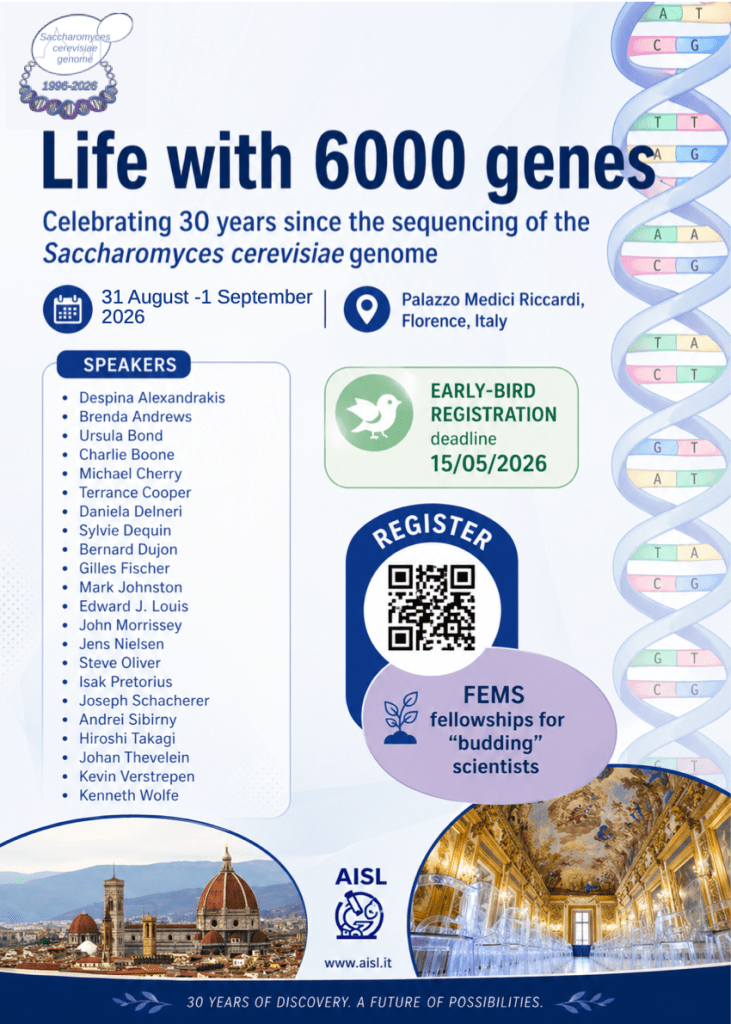
This year marks the 30th anniversary of a landmark achievement in biology: the publication of the complete Saccharomyces cerevisiae genome sequence in 1996 - the first eukaryotic genome ever sequenced.
Since before the genome was even complete, SGD has served as the authoritative resource for yeast genomics. Over three decades, we've evolved from a simple sequence repository to a comprehensive biological knowledge hub, providing expert curation and multi-dimensional annotations that support researchers worldwide.
A special meeting, Life with 6000 Genes, takes place August 31 - September 1, 2026 to commemorate this milestone and the remarkable era of discovery it enabled.
To mark this anniversary, SGD team members have authored a retrospective chronicling our 32-year history, from the founding vision through today's collaborative database ecosystem. The article will appear in a special issue of FEMS Yeast Research.
Thank you to the yeast research community for three decades of collaboration, contributions, and discoveries!
New Pathway Pages: Comprehensive Views of Yeast Biochemical Pathways
SGD now has Pathway Pages – dedicated pages for each of the 220 manually curated biochemical pathways in yeast.
Pathway pages offer a complete view of specific biochemical pathways in Saccharomyces cerevisiae. Each page integrates information from multiple sources to help you understand what the pathway does, which genes are involved, how gene products interact, and which chemicals are involved.
Interactive Pathway Diagrams
Each pathway page features a pathway diagram showing the chemical reactions and metabolic flow. The diagram displays:
- Chemical compounds involved (substrates and products)
- Enzymes catalyzing each reaction
- Reaction directionality and relationships
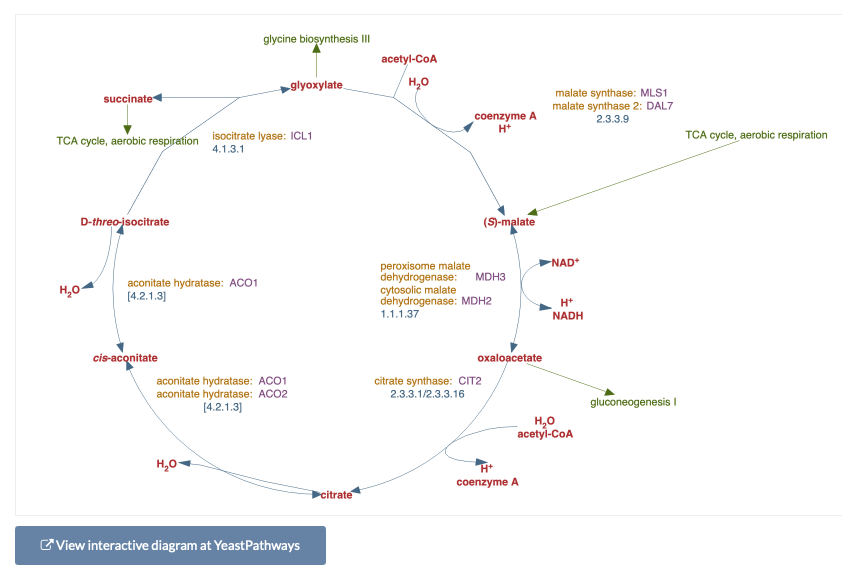
A "View interactive diagram at YeastPathways" button takes you to the full interactive version where you can explore the pathway in greater detail.
Pathway Summary
Expert-curated descriptive text explains:
- What the pathway does and why it's important
- Biological context and cellular roles
- Connections to other metabolic processes
- Key regulatory mechanisms
For example, the glyoxylate cycle page explains how this essential pathway allows yeast to grow on two-carbon compounds and its role in providing precursors for biosynthesis.
Genes Involved
A comprehensive table of genes participating in the pathway includes:
- Gene names (standard and systematic)
- EC numbers for enzymatic activities
- Functional descriptions
- Direct links to gene pages for detailed information
This makes it easy to see all the players in a pathway at a glance and access detailed information on any gene of interest.
Functional Networks
Pathway pages now include the same Functional Networks features available on gene pages:
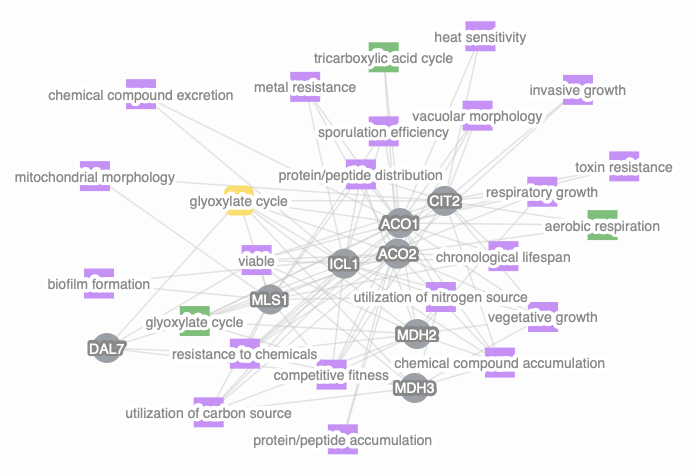
Shared Annotations Network: Visualizes how genes in the pathway share phenotype and GO annotations, helping you identify:
- Functional relationships between pathway genes
- Connections to genes in related pathways
- Potential regulatory relationships
You can filter the network by the number of shared pathway genes to focus on the most relevant connections.
GO-CAMs: When available, Gene Ontology Causal Activity Model pathway models are displayed, showing:
- Causal relationships between molecular activities
- How gene products work together mechanistically
- Regulatory interactions and dependencies
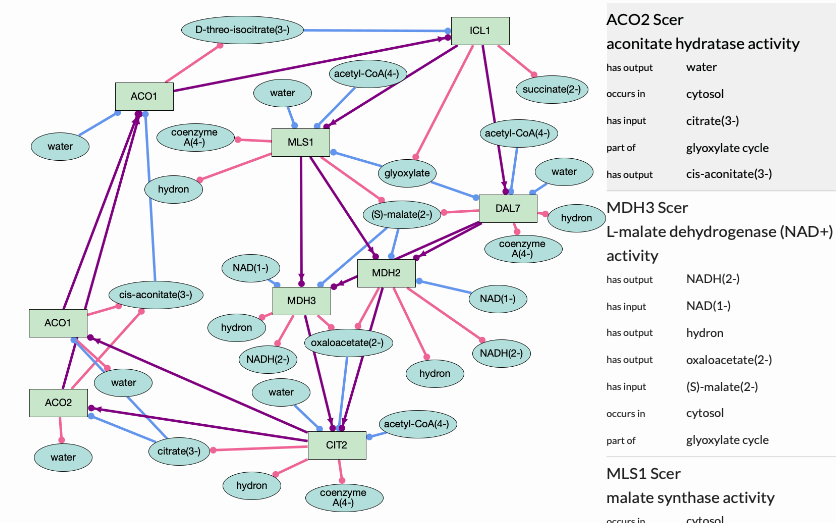
If multiple GO-CAM models involve genes from the pathway, you can switch between them using a dropdown menu.
GO Enrichment Analysis
The GO Enrichment section shows which biological processes are statistically overrepresented among pathway genes. This helps you:
- Understand the broader biological context
- See connections to related processes
- Identify key functional themes
Each enriched term links to the genes involved and shows the statistical significance (p-value).
Browse All Pathways
Explore all 220 curated pathways:
- Browse pathways: Search for pathways
- Example: Glyoxylate cycle
- YeastPathways: All metabolic pathways
Explore the Redesigned SGD Search Landing Page
SGD's search landing page has been redesigned to make it easier to find the yeast biological information you need.
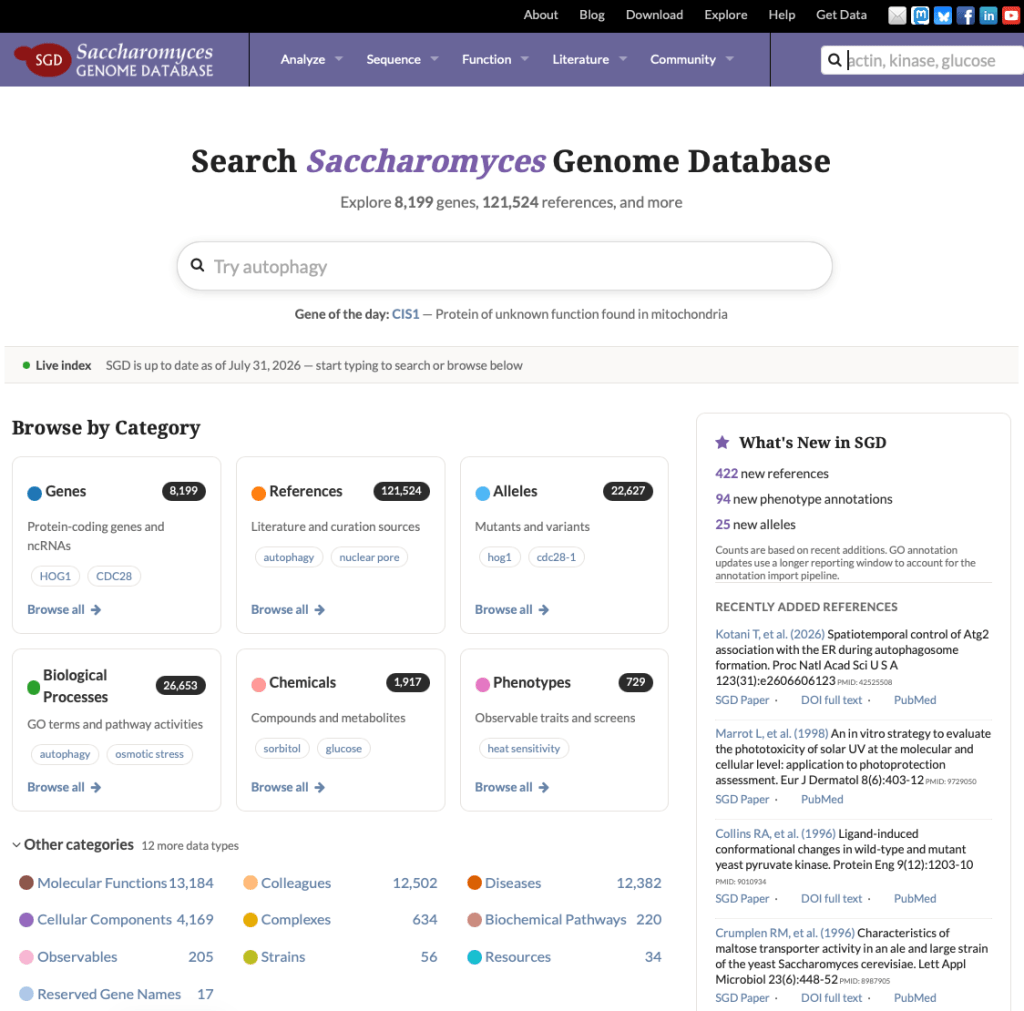
Enhanced Search Experience The new landing page features an improved search box with smart autocomplete functionality that suggests genes, chemicals, pathways, and other entities as you type. This makes searching faster and helps you discover relevant results even if you're not sure of the exact name.
Quick Category Browsing Need to browse rather than search? The new page includes quick access buttons for popular categories including genes, complexes, pathways, and chemicals. Click any category to start exploring without typing a single character.
Advanced Filtering Refine your search results by category or other criteria to quickly zero in on exactly what you're looking for. The redesigned interface provides clearer visual organization with distinct sections for different data types.
Stay Current with SGD The right side of the page now highlights SGD's latest activity:
- New Literature Added shows the most recently curated publications
- Recent Annotations displays the latest curated data, including new phenotypes, alleles, and GO annotations
This makes it easy to stay up-to-date with the newest information added to SGD.
There are two easy ways to reach the new search landing page:
- Click the red "Explore SGD" button on the SGD homepage
- Press return/enter in the search box without typing anything (empty search)
Or go directly to: https://www.yeastgenome.org/search
Happy exploring!
New Filtering Options on the Yeast Papers Page
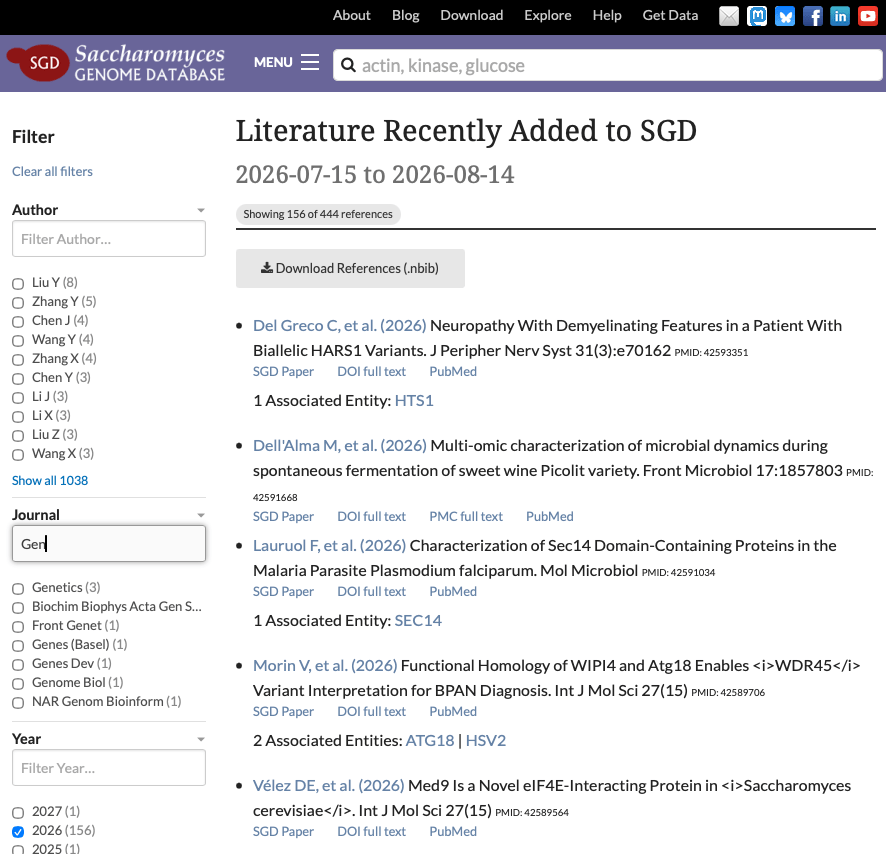
The New Yeast Papers page at SGD (yeastgenome.org/reference/recent) is your rolling monthly snapshot of publications newly added to the database, now with filtering options to help you find the papers most relevant to your research.
The page has always been a great way to stay current with Saccharomyces cerevisiae research, listing newly-added publications over the last 30 days along with the genes, alleles, complexes, and pathways associated with each paper. It's updated daily, and now you can filter it by:
- Author: find papers by a specific researcher
- Journal: browse what's new in your favorite publications
- Year: narrow the list by publication year
- Associated genes: zero in on papers linked to your gene of interest
- Associated alleles: filter by specific alleles
- Associated complexes: find papers connected to a complex you're studying
- Associated pathways: focus on your pathway of interest
Each filter shows the most frequently occurring values along with reference counts, giving you an at-a-glance view of what's trending in this month's yeast literature. Combine multiple filters to get as specific as you need, and use Clear all filters to reset. And as always, you can download the full reference list in .nbib format for your reference manager.
Access the New Yeast Papers page anytime via the Literature menu in the purple SGD navigation bar, or from SGD's new Search landing page (bookmark this!) or go directly to yeastgenome.org/reference/recent. Happy reading!
Overhauled Complex Pages: Enhanced Data Access and Improved User Experience
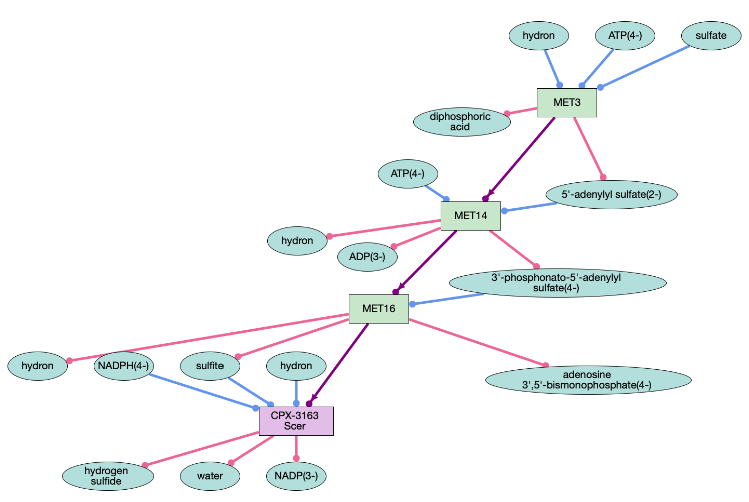
SGD's macromolecular complex pages have been overhauled to make complex information more accessible, comprehensive, and easier to navigate.
Why Protein Complexes Matter
Protein complexes are fundamental functional units in cells that operate as groups of proteins that work together to carry out specific biological processes. Since 2019, SGD has provided detailed information about yeast protein complexes, including subunit composition, functions, interactions, and references.
All Gene Ontology Information on One Page
One of the most significant improvements is the reorganization of Gene Ontology (GO) annotations. Previously, GO information was tucked away on a separate tab, requiring you to navigate away from the main view. Now, all GO annotations are prominently displayed right on the Summary page.
What you can see at a glance:
- Molecular Function: What the complex does
- Biological Process: What pathways or processes it participates in
- Cellular Component: Where in the cell it's located
All three are now visible directly on the Summary page.
GO-CAM Pathway Models for Complexes
We've also integrated GO-CAM (Gene Ontology Causal Activity Models) pathway models directly into complex pages. When available, these models appear below the GO annotations, showing how entire protein complexes fit into larger biological pathways and regulatory networks.
Enhanced Composition Section
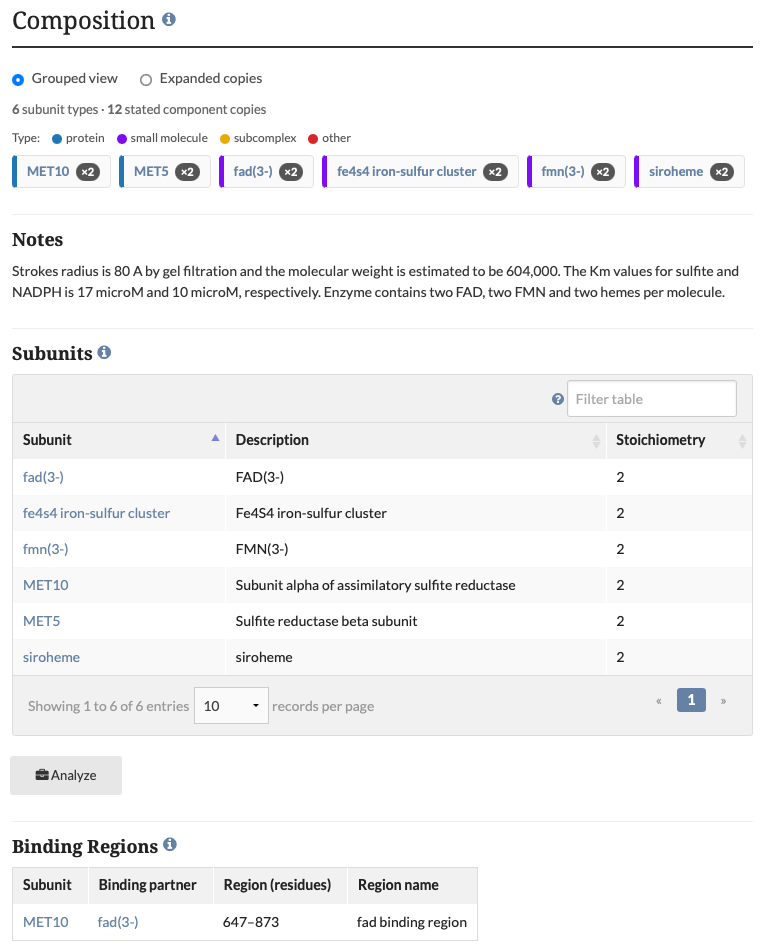
Stoichiometry Data: For complexes where the subunit ratios have been experimentally determined, you'll now see the exact stoichiometry, providing quantitative information about complex architecture.
Structural Information:
- Expert-curated notes about complex assembly and structural features
- Direct links to Protein Data Bank (PDB) entries for complexes with experimentally determined 3D structures
- Protein-protein binding regions and interaction interfaces (when characterized)
Organized Display: Subunits are now grouped by their roles or relationships within the complex, making it easier to understand how the complex is organized.
Easy Navigation: Each subunit links directly to its SGD gene page, so you can access detailed information on individual components.
Shared Biology Networks
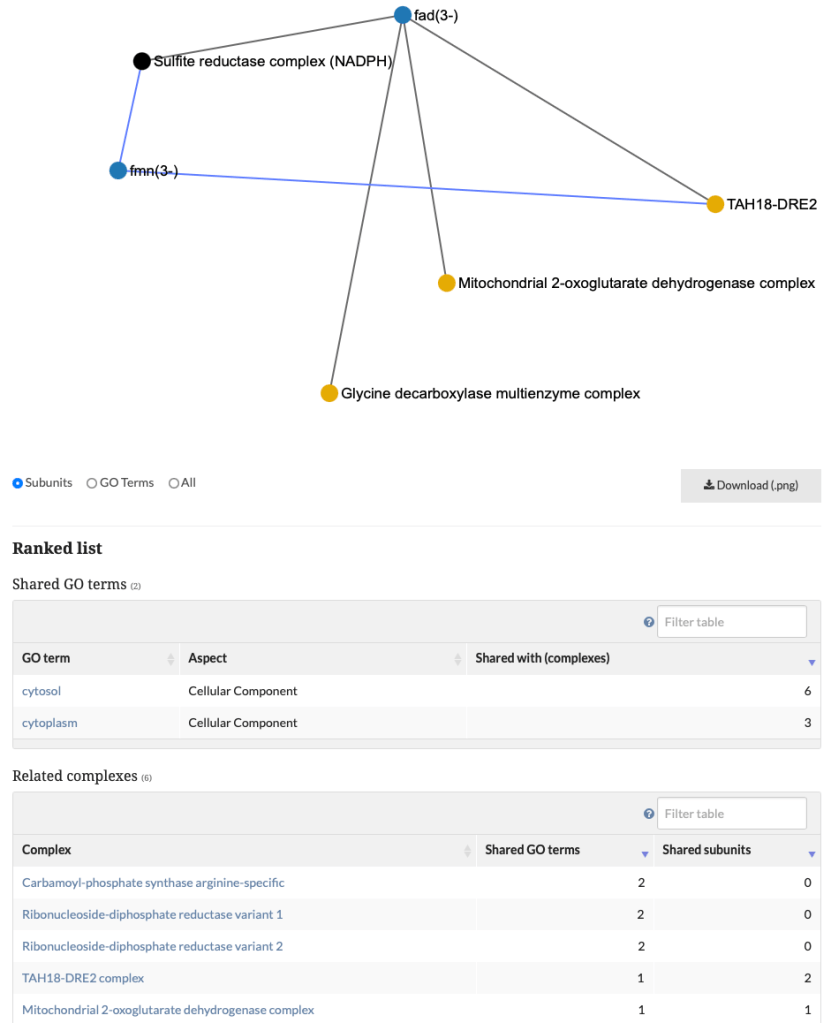
Complex pages now include a Shared Biology section that shows GO annotations shared with other complexes, subunits shared between complexes, and ranked lists that prioritize the most functionally related complexes.
Improved User Experience Throughout
- Clearer section headers make information easy to find
- Better spacing and organization improve readability
- Consistent styling with other SGD page types provides a unified experience
- Logical information hierarchy puts the most commonly accessed data front and center
- Example: Sulfite reductase complex (NADPH)
- Browse all complexes: Search for complexes
Functional Networks: Visualizing Gene Relationships at SGD
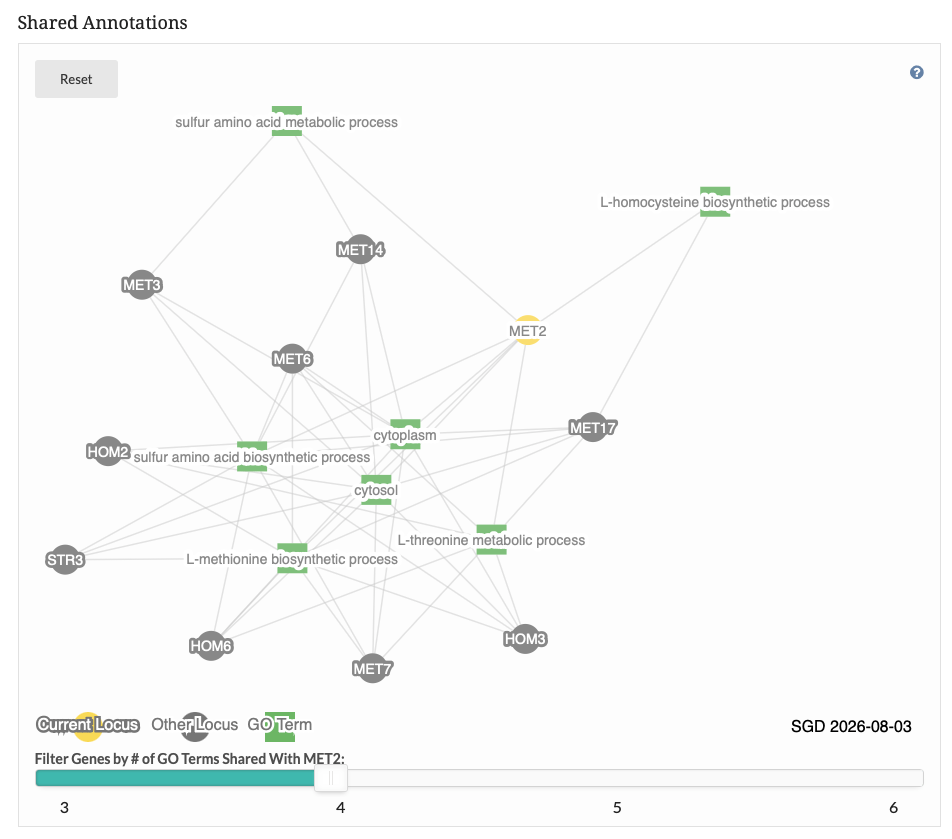
New Functional Networks sections are now available on gene and complex pages. This addition helps researchers understand how genes and proteins work together in biological systems.
Shared Annotations Networks
Ever wondered which other genes might have similar functions to your gene of interest? The Shared Annotations network visualizes genes that share similar Gene Ontology (GO) annotations with your query gene. These networks are generated based on overlapping GO terms across Molecular Function, Biological Process, and Cellular Component.
Why is this useful?
- Identify potential interaction partners
- Find paralogs with related functions
- Discover genes that may participate in similar biological processes
- Generate hypotheses for experimental design
Most genes in the S. cerevisiae genome have sufficient GO annotations to generate these networks, providing broad coverage across the yeast proteome.
GO-CAM Pathway Models
GO-CAMs (Gene Ontology Causal Activity Models) represent an exciting advancement in pathway representation. Unlike traditional GO annotations that link individual genes to single terms, GO-CAMs show how multiple gene products work together in integrated pathway models with causal relationships showing how one molecular activity leads to another.
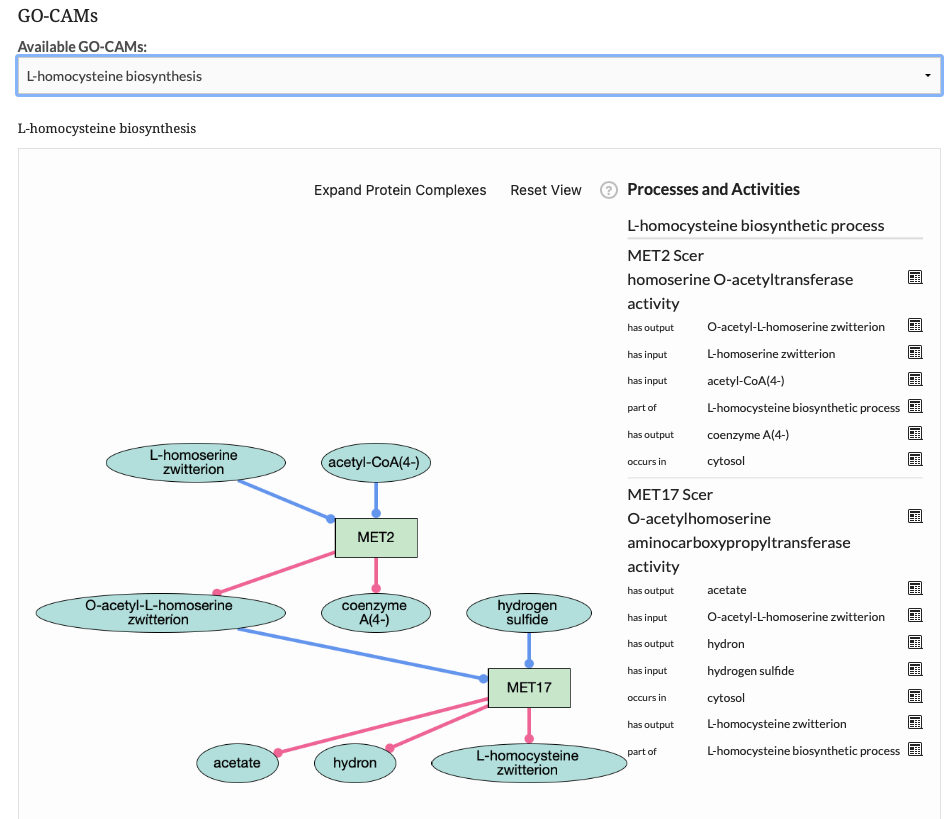
What makes GO-CAMs special?
- Causal relationships: See how one molecular activity leads to another, including activation, inhibition, and regulatory interactions
- Integrated view: Combines Molecular Function, Biological Process, and Cellular Component information in one unified model
- Evidence-based: All models are manually curated by expert biologists and supported by published experimental data
Currently, 470 yeast genes are associated with GO-CAM models, and this number continues to grow as additional pathways are curated.
When multiple GO-CAM models are available for a gene, you can easily switch between them using a pull-down menu. Each model includes a "View GO-CAM at Gene Ontology" link that opens the interactive pathway in AmiGO, where you can explore detailed evidence codes, supporting references, and connections to other pathways.
Functional Networks on Complex Pages
We've also added ...
read the rest of our August Newletter at SGD
Note: The goal of this newsletter is to inform our users about new features in SGD and to foster communication within the yeast community. If you wish to receive this newsletter via email, please contact the SGD Help Desk at sgd-helpdesk@lists.stanford.edu.