About this newsletter:
This is the May 2026 issue of the SGD newsletter. The goal of this newsletter is to inform our users about new features in SGD and to foster communication within the yeast community.
Contents
-
Introducing BLAST Search for SGD at the Alliance of Genome Resources
-
Naming Your Newly Characterized Yeast Gene: A Guide to SGD Gene Nomenclature
Join Us at Yeast Genetics Meeting 2026
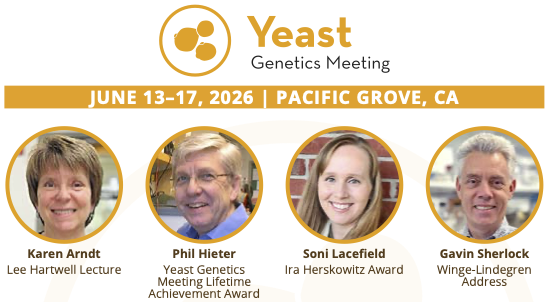
The Yeast Genetics Meeting is the premier meeting for people studying various aspects of eukaryotic biology in yeast, the major model organism for understanding human cell biology and human disease mechanisms. This international meeting has a 40-year history and is held every two years in North America.
The SGD team will be at this year’s Yeast Genetics Meeting at Asilomar, and we’d love to connect with you! We’re hosting a workshop and will have a table and posters throughout the conference.
Workshop: Unlocking Yeast Biology with SGD: Tools, Data, and Discovery
Monday, June 15, 2026 | 3:30 p.m. - 5:30 p.m.
Learn how to leverage the Saccharomyces Genome Database (SGD) to accelerate your research. This workshop will highlight key tools, curated datasets, and practical strategies for exploring gene function, pathways, and genomic data in Saccharomyces cerevisiae. Whether you’re a longtime SGD user or new to the resource, you’ll discover ways to make the most of SGD’s comprehensive data and analysis tools.
Stop by our table and posters during the meeting to chat with the SGD team, share your feedback, ask questions, or learn about the latest updates to SGD and the Alliance of Genome Resources. We look forward to seeing you there!
Introducing BLAST Search for SGD at the Alliance of Genome Resources
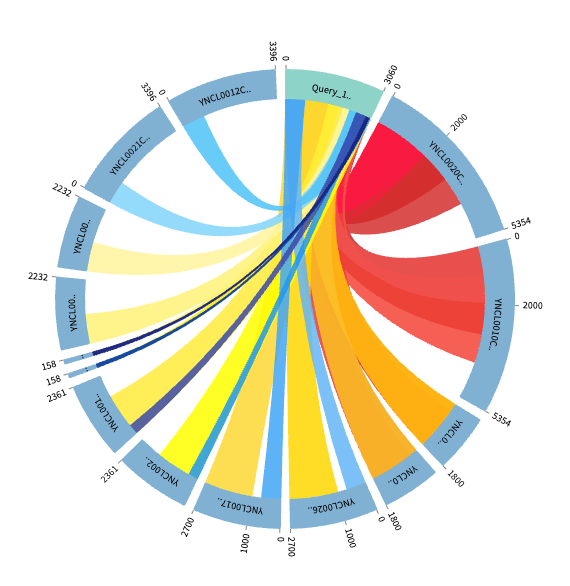
We’re excited to announce the launch of a new BLAST service for Saccharomyces Genome Database (SGD) data, now available at the Alliance of Genome Resources. This release marks another significant milestone in our ongoing effort to migrate SGD services and data to the Alliance platform, ensuring continued access to essential yeast genomics tools within an integrated, multi-organism framework.
What’s New
The Alliance BLAST service provides researchers with powerful sequence similarity search capabilities against SGD datasets, maintaining the functionality that the yeast research community has relied on for years while benefiting from the Alliance’s modern infrastructure and cross-species integration.
Key Features
-
Comprehensive SGD datasets: Search against the complete S. cerevisiae genome, including coding sequences, proteins, and genomic DNA
-
Familiar BLAST functionality: All standard BLAST algorithms (BLASTN, BLASTP, BLASTX, TBLASTN, TBLASTX) are supported
-
Enhanced performance: Leveraging the Alliance’s updated infrastructure for faster search results
-
Cross-species exploration: Seamlessly explore homologs across other Alliance member databases
Part of a Broader Migration
This BLAST service is part of our comprehensive strategy to transition SGD resources to the Alliance of Genome Resources. This migration ensures that:
-
SGD data remains accessible and well-maintained for the research community
-
Users benefit from integration with data from other model organisms
-
Resources are consolidated on a sustainable, collaborative platform
-
The yeast community gains access to enhanced comparative genomics tools
Visit the Alliance of Genome Resources to access the new services for SGD BLAST and Fungal BLAST. The datasets will be familiar to longtime SGD users.
We remain committed to supporting the yeast research community through this transition. Additional SGD tools and features will continue to migrate to the Alliance platform in the coming months. Stay tuned for updates, and as always, we welcome your feedback.
Textpresso Literature Search: New Login System
Textpresso is a specialized literature search tool provided by SGD that allows users to search through full-text scientific articles using keywords. It’s particularly useful for finding specific mentions of genes, phenotypes, or experimental details that might not appear in article abstracts.
Textpresso has implemented a new authentication system using Amazon Cognito as part of the ongoing migration to the Alliance of Genome Resources infrastructure. Previously, Textpresso could be used without logging in, but going forward, all users will need to create a free account through a simple self-signup process. The new system provides secure authentication while maintaining the powerful literature search capabilities researchers depend on. When you next visit Textpresso, you’ll be prompted to create an account using your email address. You’ll receive a verification code to complete the setup, and then you’ll be ready to search. Your existing Textpresso bookmarks will continue to work, you’ll just need to log in first. More information: http://textmining.textpresso.org/new-login-system/
Naming Your Newly Characterized Yeast Gene: A Guide to SGD Gene Nomenclature
Have you discovered the function of a previously uncharacterized Saccharomyces cerevisiae gene? Here’s everything you need to know about giving it an official standard name.
Understanding Yeast Gene Nomenclature
SGD maintains the S. cerevisiae nomenclature according to guidelines established by the yeast research community. These conventions ensure consistency and clarity across the field, making it easier for researchers worldwide to communicate about genes and their functions.
The Naming Rules
Valid standard names for S. cerevisiae ORFs follow a simple but important format:
-
Three letters followed by a number (for example, COX2 or CDC28)
-
Must be unique, not previously used to describe another yeast gene
-
Should ideally reflect function when possible
This naming convention has served the yeast community well for decades, creating an intuitive system where gene names often provide immediate clues about biological roles.
How to Reserve Your Gene Name

If you’re preparing to publish work on a gene that currently has only a systematic name (like YAL037W), reserve a standard name through SGD before publication. Here’s how:
The Reservation Process
-
Submit early: Reserve your gene name before you publish. A gene name reservation is valid for twelve months, which is typically enough time to write, submit, and publish your manuscript.
-
Access the reservation form: Visit https://www.yeastgenome.org/reserved_name/new, or navigate from any SGD page using the purple toolbar at the top: Community > Nomenclature > Submit a Gene Registration.
-
Publication makes it official: Your reserved gene name will become the standard gene name upon publication.
Best Practices for Publication
When you’re ready to publish, we recommend:
✓ Double-check the literature to ensure your chosen name is still unique
✓ Include both the ORF name and gene name in your abstract – this helps SGD and other databases find and curate your paper efficiently
✓ Verify your reservation is still active if your publication timeline will extend beyond the initial twelve-month period
Need More Information?
You can review the nomenclature conventions for yeast on our Help pages. The complete gene naming process is described in detail in our Gene Naming Guidelines.
Questions?
The SGD team is here to help! If you have questions about the gene name reservation process or nomenclature guidelines, please don’t hesitate to contact us.
Alliance of Genome Resources News
Alliance of Genome Resources – Latest Releases 9.0.0 & 8.3.0
9.0.0 Release – May 13, 2026
The 9.0.0 release includes data refreshes from each of the model organism source databases as well as various backend improvements.
Updates and improvements have been made to the following pages:
-
Non-gene genome features, e.g. enhancers, TF binding sites, etc., are now represented on their own respective “Gene” pages labeled as “GENOME FEATURE”. Examples include this enhancer page and this TF binding site page
-
The gene page Alleles and Variants table now has fully functional filtering for Allele symbol and Variant name
-
Allele page Genomic Variant Information and (high-throughput) Variant page Summary widgets now display the relevant genome assembly, thousand comma separators for genomic coordinates (for ease of reading), and symbol hyperlinks to JBrowse for the respective variant
-
Note that rs IDs for variants are no longer used to construct URLs for high-throughput variants matching the rs IDs because a single rs ID can represent multiple individual variants for which we would like to render a Variant page. Instead, HGVS.g names are used as unique identifiers in URLs to point to distinct and individual variants in a more robust manner. An example of an rs ID use on the 8.3.0 release and prior is rs864303764 which enabled a single URL in those prior releases but did not adequately represent all three individual variants that the rs ID represents. These are now represented by URLs constructed based on the full HGVS.g name for each variant: NC_000085.7:g.3684464A>C, NC_000085.7:g.3684464A>G, and NC_000085.7:g.3684464A>T (example URL: https://www.alliancegenome.org/variant/NC_000085.7:g.3684464A>C)
-
Many high throughput variant insertions, deletions and indels had been mistakenly omitted from the Alliance variant data set, but have now been included for the 9.0.0 release
-
This release makes available a large increase in the number of C. elegans alleles (~12K to ~1.9M) due to shifting data sources on our back end resources
-
Gene page Summary widgets now display, where applicable, a gene systematic name (for fly, worm, and yeast genes) and UniProt Gene Centric Reference Proteome (GCRP) IDs, distinct from other UniProtKB IDs
-
A number of significant backend changes have removed or modified existing Alliance public API endpoints. See release notes for examples.
-
All “Cache Search” endpoints have been removed. See release notes for examples.
-
All “Homology” endpoints have been removed (homology data can be extracted from the Orthology file on the Downloads page and endpoints for gene/orthologs and gene/paralogs). See release notes for examples.
-
Other select endpoints have been removed, replaced by the updated endpoints. See release notes for examples.
-
Modified endpoints are now compliant with our LinkML data model and deliver a different JSON format from previous releases. See release notes for examples.
-
8.3.0 Release – December 17, 2025
The 8.3.0 release includes data refreshes from each of the model organism source databases as well as various backend improvements.
Updates and improvements have been made to the following pages:
-
The News page https://www.alliancegenome.org/news now includes a feed for the Alliance Mastodon account.
-
The Alliance BLAST Service page https://www.alliancegenome.org/blastservice has been updated to include fly, worm, yeast, fungal, and rat BLAST services. This BLAST service allows researchers to search genomic sequences using the Basic Local Alignment Search Tool (BLAST). By entering a sequence or query, users can find regions of similarity to various genomes within the Alliance. This service supports separate environments for each of the Model Organism Databases (MODs) as well as a unified environment for the Alliance. Results provide detailed alignments and annotations to aid in your research.
-
Gene page transgenic alleles tables have been updated with improved filter and sort options, and now include alleles where the focus gene plays a regulatory role in transgenic constructs.
-
Gene page expression data now features enhanced sorting capabilities and clearer formatting in downloadable files.
microPublications – Latest Yeast Papers

microPublication Biology is part of the emerging genre of rapidly-published research communications. microPublications publishes brief, novel findings, negative and/or reproduced results, and results which may initially lack a broader scientific narrative. Each article is peer-reviewed, assigned a DOI, and indexed through PubMed and PubMedCentral. Consider microPubublications when you have a result that doesn’t necessarily fit into a larger story, but will be of value to others. Latest yeast microPublications:
-
Wang TK, et al. (2026) A cross-species rescue by mating method to interrogate gene essentiality across the Saccharomyces genus. MicroPubl Biol. 2026 Mar 27;2026:10.17912/micropub.biology.002022. doi: 10.17912/micropub.biology.002022. eCollection 2026.
-
Brown K, Singuluri H, Perkins F, Kuchin S (2026) The N-terminal α helix domain of the mitochondrial VDAC protein Por2 is dispensable for promoting the nuclear localization of yeast AMPK. MicroPubl Biol. 2026 Feb 23:2026:10.17912/micropub.biology.001040. doi: 10.17912/micropub.biology.001040. eCollection 2026.
-
Ackermann LM, Ro A, Dunn B, Moore R, Doss G, Armstrong JO, Dunham MJ (2026) Using Experimental Evolution to Correct Mother-Daughter Separation Defects in Brewing Yeast. MicroPubl Biol. 2026 Feb 13:2026:10.17912/micropub.biology.001962. doi: 10.17912/micropub.biology.001962. eCollection 2026.
-
Klepin S, Michalik B, Pillus L, Chik JK (2025) Mutation of a conserved anthranilate phosphoribosyltransferase active site residue supports tryptophan biosynthesis in vivo. MicroPubl Biol. 2025 Dec 15:2025:10.17912/micropub.biology.001925. doi: 10.17912/micropub.biology.001925. eCollection 2025.
-
Beckwith SL (2025) Co-expression of a retrotransposon and re-targeted restriction factor impairs yeast growth. MicroPubl Biol. 2025 Nov 3:2025:10.17912/micropub.biology.001905. doi: 10.17912/micropub.biology.001905. eCollection 2025.
Upcoming Conferences & Courses
-
-
June 13 to June 17, 2026 -
-
Asilomar Conference Grounds, Pacific Grove, CA
-
-
Chromosome Biology and Cell States in Yeasts
-
July 27 to July 29, 2026 -
-
Niagara Falls Convention Center, Niagara Falls, NY
-
-
41st SMYTE Small Meeting on Yeast Transport and Energetics
-
September 12 to September 16, 2026 -
-
Chaves, Portugal
-
-
39th International Specialized Symposium on Yeasts (ISSY39)
-
November 08 to November 12, 2026 -
-
Seoul, South Korea
-
The End of PomBase?
Recently, PomBase learned that their grant application to the UK’s Biotechnology and Biological Sciences Research Council (BBSRC) for three years of funding was unsuccessful.
This decision places PomBase on a path to closure. Without alternative support, which at present seems unlikely, Pombase will lose not only the database but also the specialist expertise required to curate, maintain, and develop it. All three staff are funded entirely through grants; when funding stops, the resource and the knowledge behind it disappear together.
PomBase, like SGD, is a core piece of scientific infrastructure. It underpins research far beyond the yeast community, enabling discovery, reproducibility, and data integration across the life sciences. Losing it would not be a local setback; it would be a permanent loss to the global research ecosystem.
This is not just about PomBase. Essential bioinformatics resources are at risk. Other model organism databases, like SGD and Flybase, are under the same funding squeeze. FlyBase now requires support by direct fees from the community to sustain its curation. The wider scientific community must choose to sustain the shared infrastructure that drives modern biology and innovation. The contraction of funding has exposed a systemic vulnerability in how we fund biological data resources. We urge funders, institutions, and the community to recognize what is at stake. Once lost, resources like PomBase, Flybase, and SGD cannot simply be rebuilt.
In Memoriam: David Botstein

We are deeply saddened to share the news of the passing of David Botstein, a towering figure in modern genetics and a foundational force behind the Saccharomyces Genome Database (SGD).
SGD began in the early 1990s in David’s lab at Stanford University, and his vision for a rigorously curated, community-centered resource set the course for what SGD is today. His belief that carefully organized, interoperable data would accelerate discovery has guided our work from the start and continues to shape our mission.
David’s scientific impact is vast and enduring. He co-authored the landmark 1980 paper introducing the use of restriction fragment length polymorphisms (RFLPs) for human genetic mapping, a conceptual breakthrough that opened the door to finding disease genes well before whole-genome sequencing was possible. He later helped usher in the era of genome-wide expression analysis, demonstrating how systematic measurement and clustering of gene expression could illuminate cellular pathways, regulatory programs, and physiological states. Across decades, his work, leadership, and mentorship helped define the fields of genetics and genomics.
Yeast, and the global community that studies it, benefited enormously from David’s clarity of thought and sense of purpose. He championed model organisms as engines of insight, insisting that fundamental principles uncovered in yeast could illuminate biology more broadly. From the beginning, he advocated for standards, reproducibility, and open data, principles that remain at the heart of SGD. Many of the practices we still rely on, including careful literature-based curation, genotype-to-phenotype integration, and community engagement, grew directly from his vision.
David was also a gifted mentor and collaborator. He trained and inspired generations of scientists, curators, engineers, and students, encouraging bold ideas and rigorous tests of those ideas. Those who worked with him remember his incisive questions, his generosity with time and credit, and his unwavering commitment to getting the science right. His influence extends through the many people he mentored and the communities and institutes he helped build at MIT, Stanford, Princeton, and beyond.
To the SGD team, David’s legacy is personal. We have been honored to steward a resource he helped bring into being, and we remain committed to the principles he championed: accuracy, openness, and service to the community.
We extend our deepest condolences to David’s family, friends, colleagues, and the many people around the world who learned from and were inspired by him.
Note: If you wish to receive this newsletter via email, please contact the SGD Help Desk at sgd-helpdesk@lists.stanford.edu.